
Relationship OCD vs. Normal Relationship Doubts: Symptoms and Treatment
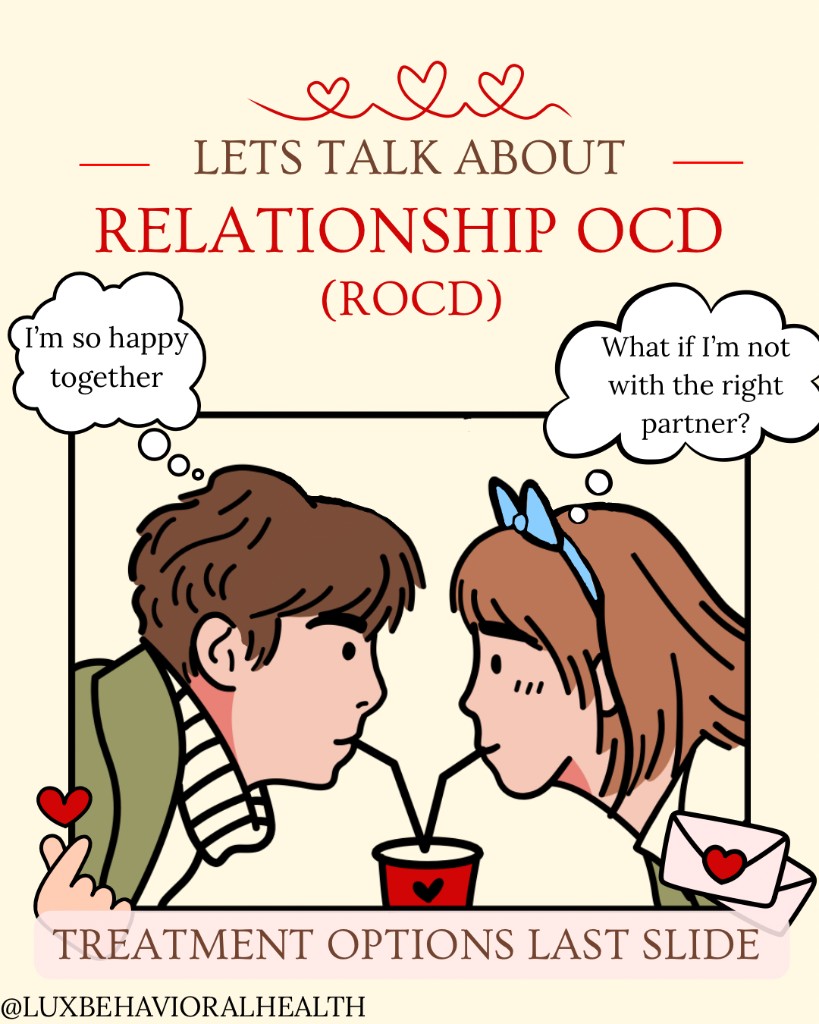
Living with OCD can be filled with distress, confusion, indecision, and anxiousness. Today I’ll explain how OCD can be sticky and trigger excessive doubt and worry to normal feelings and triggers within romantic relationships. Let’s talk about relationship-focused OCD.
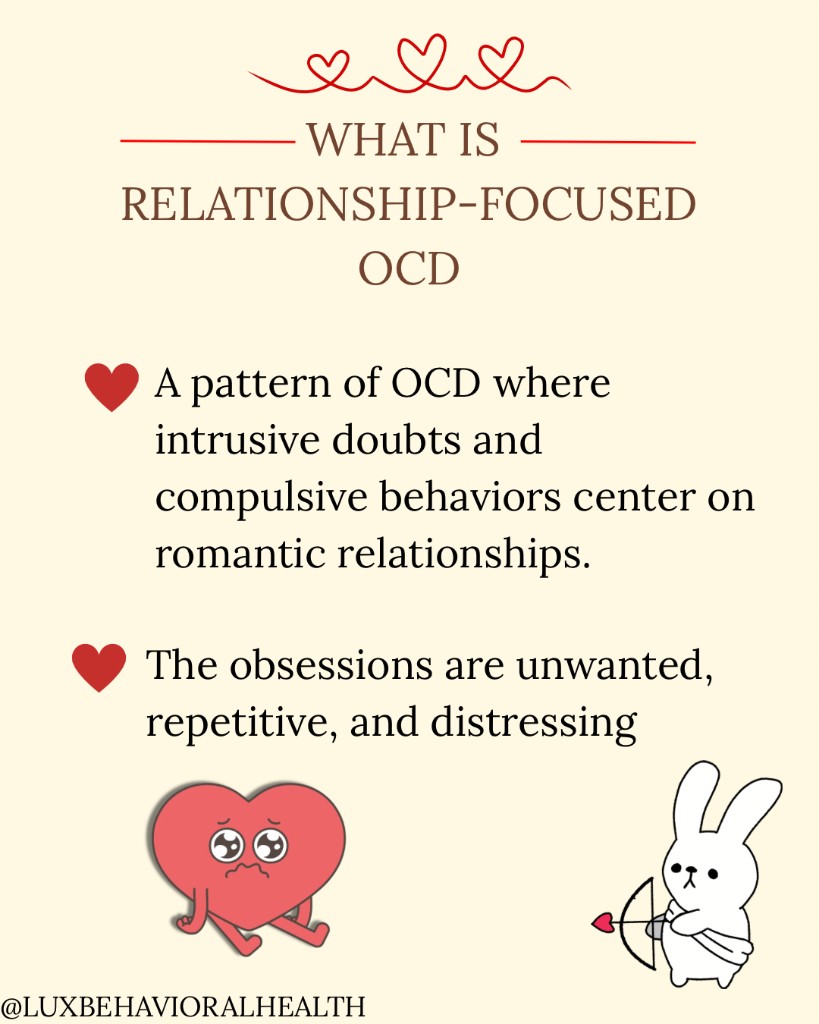
Relationship-focused OCD (ROCD) is a subtype of obsessive compulsive disorder where the sufferer has excessive concerns and doubt within their romantic relationships. It is normal to have uncertainty within any relationship. Living with OCD can unfortunately make normal worries and experiences very distressing for the individual.
It is normal within a healthy relationship to experience uncertainty when making big decisions together. Some examples include:
– Deciding when to live together
– Creating a joint bank account
– Deciding to have children together
– Blending families
– Moving long distance to be with a partner
– Making financial investments together
Obsessional uncertainty and doubt can be triggered during these large decisions. It also can be triggered from very normal interactions and observations. For instance, it is normal to notice that other people on this Earth are attractive even when in a relationship. If this wasn’t true, the tabloids and magazines would have much less to talk about.
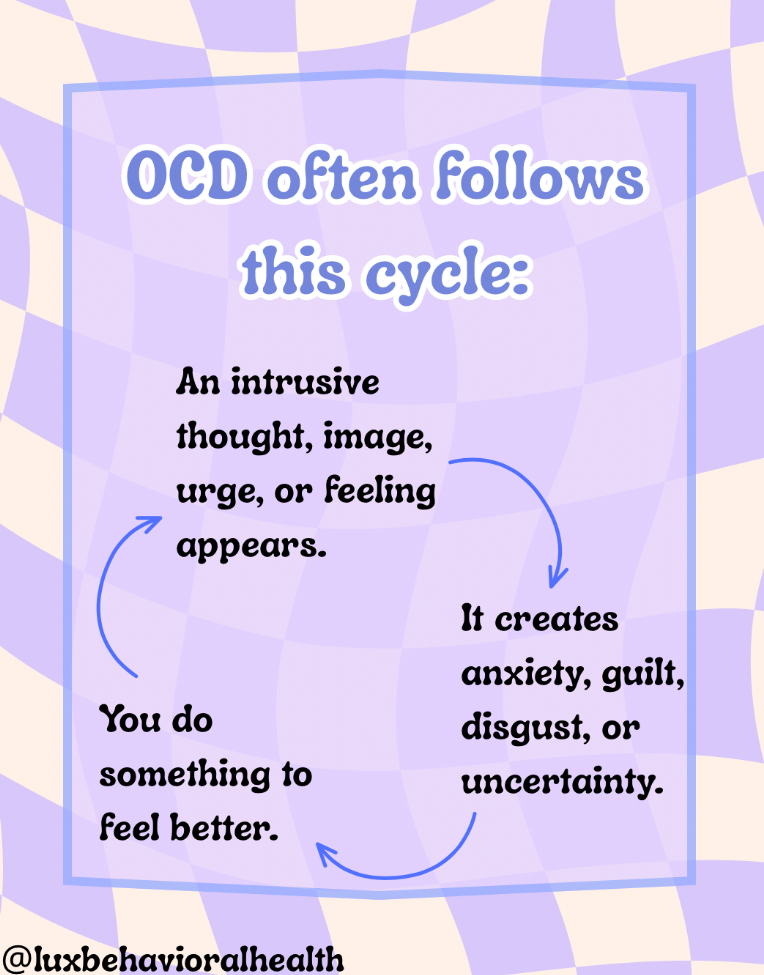
Obsessive compulsive disorder can lead the individual to experiencing excessive anxiety, rumination and compulsive checking of their feelings and attraction. This is the nature of OCD. It leads the individual to lose sight of normal human experiences and they begin to excessively doubt their feelings, memories, thoughts and actions. This leads to internal mental compulsions or outward visible physical compulsions.
Relationship-focused OCD is very good at misinterpreting normal feelings and experiences and plant doubt that can blossom into much larger worries about your relationship. This can cause tension within the relationship and undue stress on each individual as they talk about these worries. Due to the nature of OCD, these worries are often illogical, and ultimately can be the cause of healthy relationships to falter if the compulsions stemming from OCD are not managed.
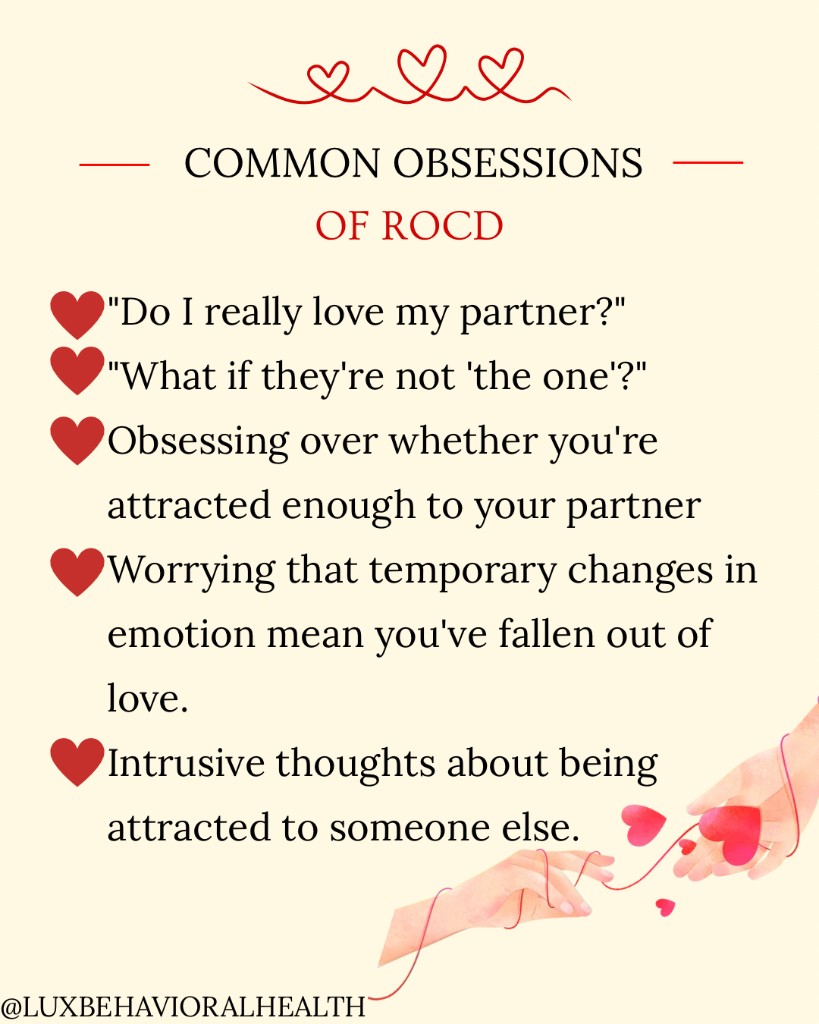
Common Obsessions of ROCD:
– “Do I really love my partner?”
– “Is my partner cheating on me?”
– “Is my partner a safe person?”
– “Am I attracted to other people?” Or “Am I attracted enough to my partner”
– Worrying temporary tension in the relationship is a sign of greater problems within the relationship
– Experiencing intrusive thoughts of the partner (or themselves) engaging in trust-breaking or relationship-ending behavior
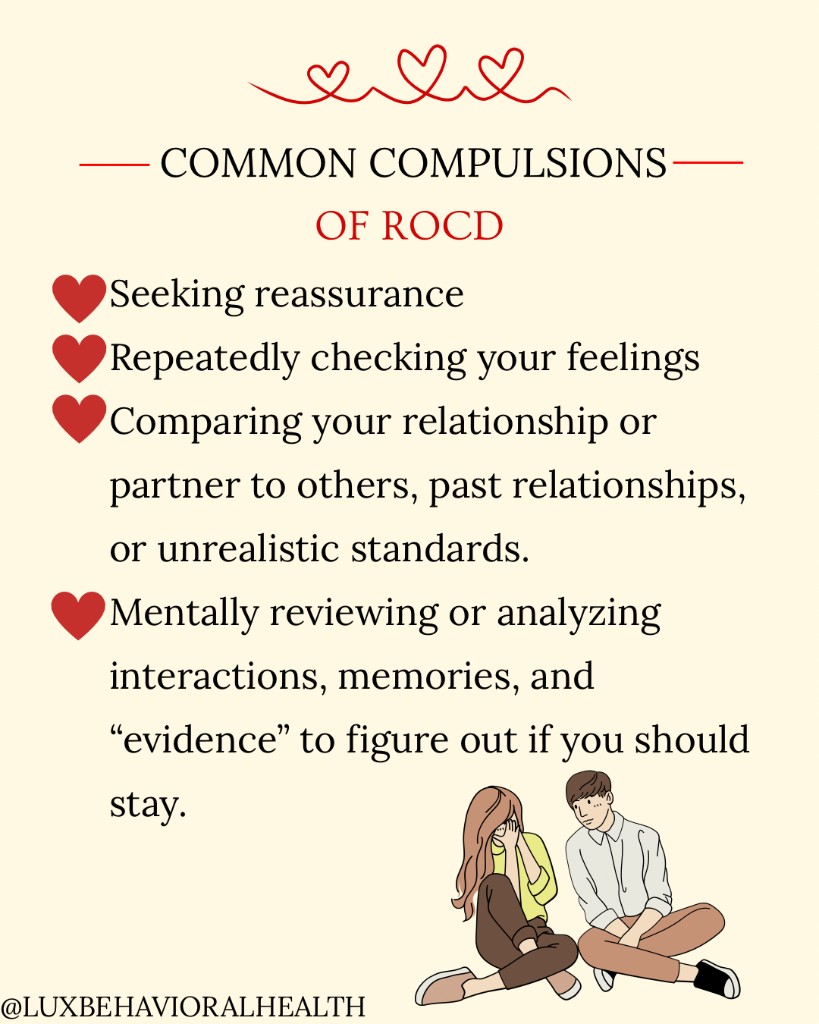
Common Compulsions of ROCD:
– Seeking reassurance from partner
– Confessing confusing and doubt to partner
– Googling signs of a healthy relationship
– Reading stories on Reddit about signs of infidelity
– Mentally reviewing memories of relationship or attraction
– Scanning their body for signs of attraction or signs that there is no attraction
– Comparing the relationship to other observed relationships
Relationship-focused OCD can be a challenge for mental health providers to notice and correctly identify as a compulsive doubting pattern within this disorder. This is because uncertainty within a relationship is normal. It is also because OCD in general is misunderstood even within the mental health provider community. Many providers can identify more obvious presentations of OCD however awareness and diagnosis can be tricky, especially when the individual experiences mostly mental compulsions.
Seeking specialist care for OCD is a game changer. If you are struggling with potential OCD, seek specialist care from a therapist who primarily treats OCD. It is helpful to ask the therapist questions about their training and experience in treating OCD. You have a right to this information when seeking care.
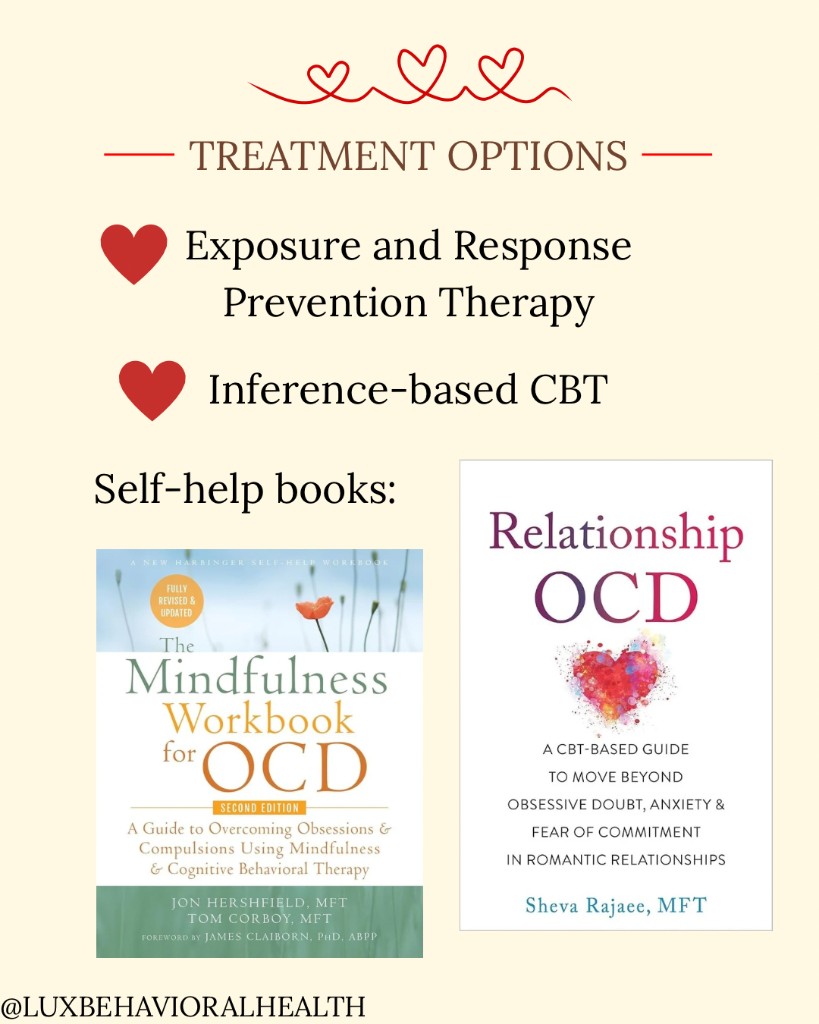
The best evidence-based treatment for Relationship-focused OCD would include Exposure and Response Prevention treatment and Inference-Based Cognitive Behavioral Therapy. It is also helpful to seek a therapist who also utilizes Acceptance and Commitment Therapy approaches with the ERP treatment they provide.
This blog is purely educational and not meant to diagnose, provide treatment or be a replacement for treatment. If you or someone you know is struggling with OCD please reach out to a trusted provider in your area. OCD treatment is available. You do not have to go through this alone.

Kelsey Gamble
Hi — I'm Kelsey Gamble
Kelsey Gamble is a Licensed Independent Clinical Social Worker (LICSW) & Therapist with 9 years of experience across OCD, Anxiety, & Trauma Therapy. She is trained in exposure and response prevention (ERP), inference-based cognitive behavioral therapy (I-CBT), and cognitive behavioral therapy (CBT), and incorporates ACT, DBT, and trauma-focused CBT to support meaningful, lasting change.
Schedule a Consultation